
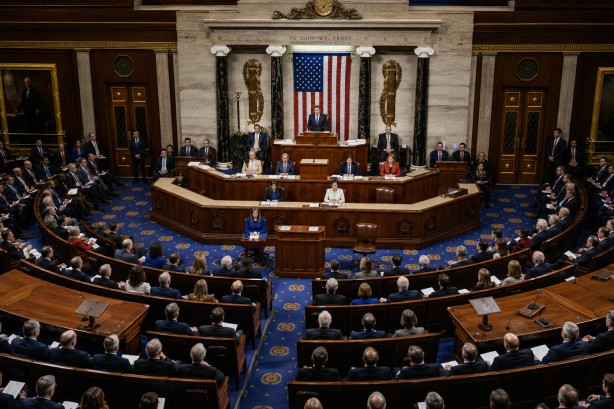
The U.S. House of Representatives has approved the $1.15 trillion National Defense Authorization Act (NDAA), marking a significant step forward for the major defense spending package. Passed by a narrow 216-212 vote, the bill now heads to the Senate despite ongoing disputes over military policy, voting rights legislation, and U.S. engagements in the Middle East.
The NDAA outlines a 5% to 7% pay increase for military personnel and authorizes substantial investments to bolster the U.S. military’s capabilities. While Republican leaders emphasized the importance of these measures for modernizing the military and enhancing national defense, the majority of Democrats criticized the bill, arguing it allocates excessive funds to defense at the expense of domestic programs, which are experiencing budget cuts.
Political tensions have further complicated the bill’s progress, particularly in light of President Donald Trump’s decision to conduct military strikes against Iran without prior congressional approval. This action raised concerns among some lawmakers about an expanded U.S. military presence in the Middle East. Additionally, Democrats have taken issue with the inclusion of voting-related provisions in the bill, which are supported by Trump. These provisions introduce stricter voter ID requirements and limit mail-in voting, which Democrats argue should not be bundled with defense legislation.
Throughout the debate, the House rejected an amendment aimed at stopping U.S. military aid to Ukraine. Other contentious amendments, such as those related to transgender military policies and defense healthcare, also sparked significant discussion. Meanwhile, House Republicans have separately approved a budget framework allocating $73 billion for military operations involving Iran, a figure that falls short of the Pentagon’s more extensive defense funding proposal.