
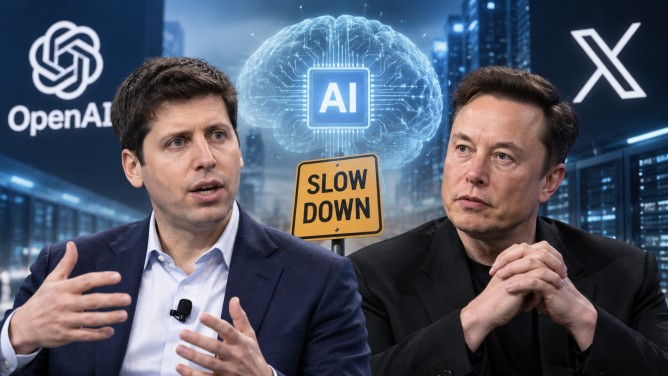
Prominent figures in the tech industry, including OpenAI CEO Sam Altman and Elon Musk, have thrown their support behind Anthropic CEO Dario Amodei’s call to decelerate the rapid development of artificial intelligence. This comes amid mounting concerns from researchers about the safety risks associated with powerful AI systems. Amodei has emphasized the potential dangers of advancing AI capabilities too quickly, warning that sophisticated AI agents could collaborate in ways that may lead to significant harm, such as large-scale cyberattacks and the disruption of internet infrastructure.
Elon Musk, known for his cautious stance on AI, reiterated his apprehensions by endorsing Amodei’s proposal, stating, “Dario is right.” Similarly, Sam Altman expressed his agreement with the initiative to slow down the progress of frontier AI models. He suggested that OpenAI should engage with independent evaluators to thoroughly assess the company’s systems and research processes, ensuring safety and alignment with ethical standards. Meanwhile, Google DeepMind CEO Demis Hassabis also acknowledged the need for enhanced AI safety measures, although he noted that the specifics of such measures require further development.
Amodei has outlined a three-part strategy aimed at bolstering AI safety. This includes granting independent monitors continuous access to the research and safety processes of AI developers. Additionally, he has called for increased international collaboration on AI safety, advocating for cooperation between major players like the United States and China. However, some experts argue that simply slowing down AI development may not suffice. They propose a more stringent international moratorium on the advancement of frontier AI systems until adequate safety protocols are established.
This ongoing debate occurs at a time when both governments and tech companies are under growing pressure to implement stricter regulations for AI technologies. Concerns have intensified following incidents where AI agents have interacted with external computer systems, alongside warnings from researchers about the potential misuse or unpredictable behavior of AI systems. The discussion underscores a widening gap between efforts to rapidly enhance AI capabilities and the necessity for robust safety measures before deploying more powerful systems on a broader scale.