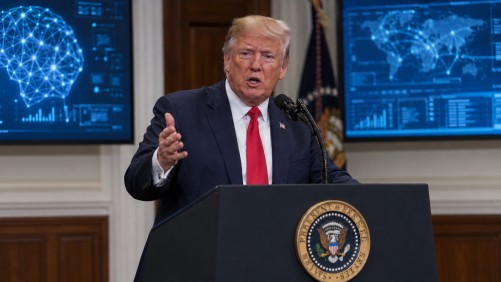
In a move to address the burgeoning influence of artificial intelligence (AI), former U.S. President Donald Trump announced plans to create an “AI Force” and appoint an AI czar. This initiative aims to oversee the rapid advancements in AI technology amidst escalating concerns about its potential risks.
Trump’s proposed AI Force is envisioned to function similarly to the U.S. Space Force, though specific details regarding its structure and timeline remain undisclosed. The announcement surfaces during intensified discussions among global governments and tech leaders about balancing AI innovation with the mitigation of associated risks.
Despite the mounting calls for stringent AI regulation, Trump has consistently opposed significant restrictions, arguing that such measures could hinder U.S. technological progress and cede competitive advantage to China. He reiterated via social media that his administration would not impede industry growth and suggested existing laws could address harmful uses of AI.
Highlighting AI as a pivotal economic driver, Trump emphasized its potential impact on the U.S. economy and stressed the importance of maintaining American leadership in the face of Chinese advancements. His announcement arrives amid a broader international debate on AI safety, especially concerning the rise of increasingly autonomous AI systems.
This federal initiative follows California Governor Gavin Newsom’s recent efforts to establish a panel focused on AI safety regulations, including mechanisms to control AI systems that deviate from their intended purposes. Concurrently, Republican figures such as Florida Governor Ron DeSantis and Utah Governor Spencer Cox have advocated for enhanced AI oversight and restrictions on technology transfers to China.
Trump’s proposal underscores the growing policy discourse in the United States, as lawmakers grapple with the challenges of fostering AI innovation while ensuring public safety and economic competitiveness.