
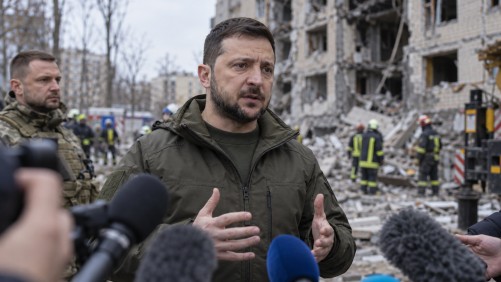
Ukrainian President Volodymyr Zelensky expressed concerns after Ukraine reportedly received no advance warning from the United States or its partners ahead of a Russian ballistic missile attack on Sunday night. Zelensky highlighted this as the third recent incident where Ukraine was left without the typical early warning of such threats, fueling anxieties about the reliability of intelligence sharing.
The absence of timely information has raised questions about the current state of intelligence cooperation between Ukraine and the United States. Despite Zelensky’s claims, US President Donald Trump denied any cessation in intelligence sharing, affirming that Washington continues to provide Ukraine with necessary intelligence. However, Ukrainian officials suspect that the US might have selectively restricted intelligence sharing, allowing the initial Russian strikes to catch them off guard. They noted that the early-warning mechanisms appeared to be reinstated before a subsequent wave of attacks later that night.
A US Defense Department official refuted claims of any policy changes regarding intelligence sharing with Ukraine, maintaining that the Pentagon’s approach remains consistent. This controversy unfolds amid heightened tensions between Zelensky and Trump over the trajectory of the ongoing conflict and strategies to resolve it.
Relations between the two nations have seen turbulence before, notably in March 2025, when the US temporarily halted intelligence sharing following a contentious meeting involving Zelensky, Trump, and US Vice President JD Vance. Although this suspension was later lifted, the current dispute underscores ongoing diplomatic challenges as both countries navigate the complexities of the war in Ukraine.